
Organic social traffic monetization on Facebook works especially well in mobile-first markets across Southeast Asia, where engagement is high, and CPMs stay low. For affiliate publishers, the challenge is converting that traffic efficiently without rebuilding campaigns every time an offer loses performance. This case study covers how a publisher monetized Facebook traffic using AdOperator SmartLink over 21 days, generating $2,386 in revenue with a net profit of $2,212. The setup combined organic Facebook pages traffic, AI-generated content, and a pre-lander funnel connected to the SmartLink system.
Case Overview
| Name | Rizky |
| Publisher type | Affiliate Marketer |
| Monetization format | SmartLink |
| Period | 21 days |
| Traffic Source | |
| GEO | Indonesia |
| Total revenue | $2,386 |
For this case study, we spoke with Rizky, a publisher from Southeast Asia who has been monetizing social traffic for about two years. He previously tested CPA and mobile-focused offers, but constantly struggled with one issue:

 “Offer selection took too much time. Some offers converted, others died after a few days. I needed something more stable.”
That’s why he decided to test Adoperator SmartLink with Facebook traffic. Manual offer rotation was the main bottleneck before switching to SmartLink. This system automatically redirected users to the highest-converting offers based on GEO, device type, and behavioral signals − with no need for daily campaign management.
How the Facebook Traffic Funnel Was Set Up
The setup followed a simple workflow:
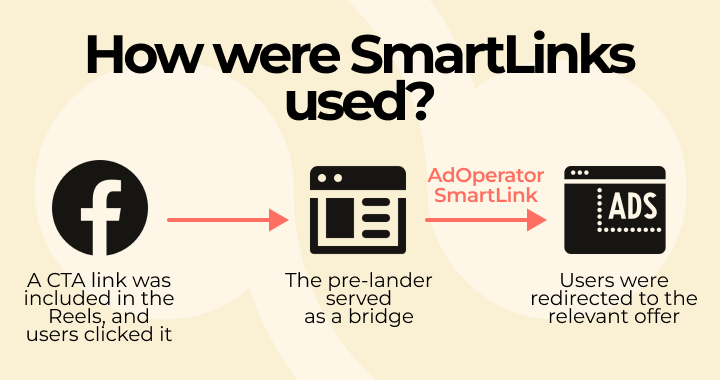
Facebook post → Pre-landing page → AdOperator SmartLink → Auto-optimized offers
Rizky used several Facebook pages with entertainment content − regular posts with images and Reels. The campaign was built around a simple AI-assisted content workflow. Instead of making photos and filming manually, Rizky generated content using AI tools. Kling and HeyGen were the primary tools for Reels − both support vertical format output and rapid iteration. Short-form content is fast to produce and can be scaled across accounts.
Each post included a call-to-action link leading users to a lightweight pre-landing page. It acted as a bridge before users were redirected through the SmartLink. After clicking the CTA button, the system routed each user to a relevant offer.
"That’s what I liked most. I didn’t need to constantly switch campaigns or check dozens of offers. The SmartLink does it for me," Rizky said. "What's more, most of the process is automated now, so I can upload multiple videos a day and test different formats."
If you want to know more about social and website traffic monetization with AdOperator, check this article: How to Make Money with SmartLink: 7 Practical Strategies
Multi-Account Setup and Scaling Strategy
The first few days were focused on testing content formats. Once Rizky identified which posts drove the most clicks, he started duplicating those setups and scaling gradually.
The biggest operational challenge was maintaining account stability while consistently uploading content. To lower the risk of limitations, the publisher:
— warmed up accounts gradually;
— mixed promotional and non-promotional content;
— rotated posting schedules;
— experimented with multiple pre-lander variations.
If one account's reach dropped, the others kept the traffic volume stable.
"One account losing reach was normal," Rizky explained. "That’s why I never relied on a single page."
Why Indonesia: GEO Performance and Audience Fit
Indonesia delivered consistently throughout the campaign: strong Facebook engagement, high mobile reach, and lower CPMs than more competitive markets.
Another important factor was the mobile performance. According to Rizky, most users came from Android devices, which matched well with the offers SmartLink selected automatically.
What helped drive engagement:
— Short emotional headlines
— Curiosity-driven hooks
— Mobile-first pre-landing pages
— Simple CTA buttons
Campaign Performance and Revenue Metrics
| Period | 21 days |
| Facebook accounts | 6 |
| Total revenue | $2,386 |
| Expenses (AI tools, proxies, etc.) | $174 |
| Net profit | $2,212 |
The earnings came entirely from SmartLink monetization. The majority of revenue came from a relatively small share of posts. Several Reels significantly outperformed the rest in terms of click-through rate, which drove most of the redirects. This is a common pattern in short-form content campaigns – consistent daily uploads increase the probability of a post gaining wider reach, which is why volume matters as much as creative quality.
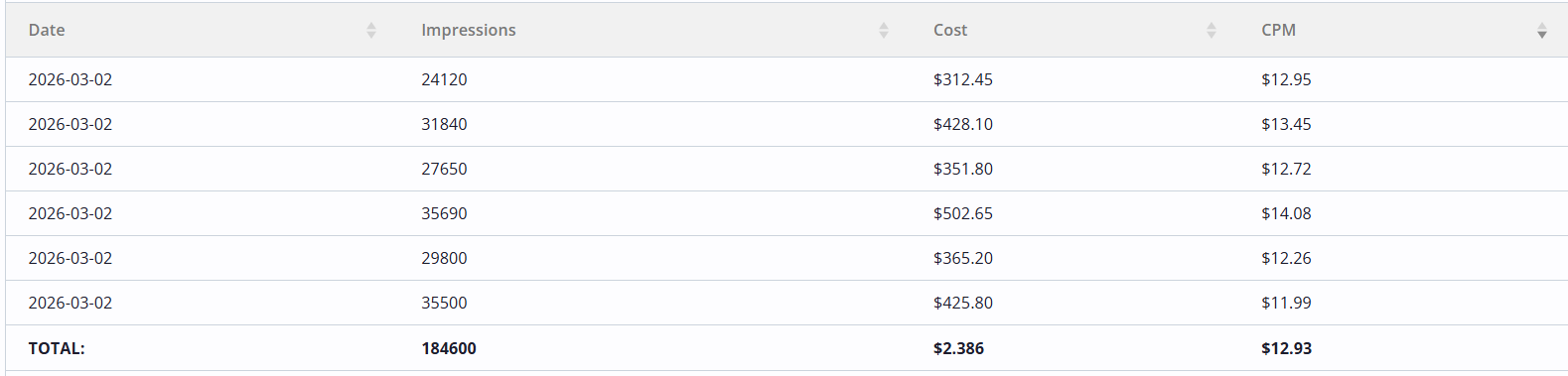
Screenshot of the campaign results
Key Takeaways for Facebook Traffic Monetization
— Low CPMs and high mobile usage in Indonesia make it a practical starting point for SmartLink campaigns.
— A simple funnel converts better if it’s built with users’ interests in mind.
— SmartLink removed the need to match offers to users manually – the system handled optimization itself.
— AI-generated images and videos cut production time significantly – new content could be tested within hours, not days.
— Accounts require a gradual warm-up before scaling promotional content. Pushing promotional content too early increases the risk of restrictions.
— Posting several times daily ensures a stable reach without triggering restrictions.
— Running several accounts in parallel reduced risk: when one dropped in reach, others kept volume stable.
Conclusion
Indonesia delivered $2,386 in 21 days on fully organic traffic, with $174 in expenses and no manual offer management. The combination of AI-generated content, a pre-lander funnel, and SmartLink automated optimization kept the campaign running without daily intervention.
For publishers looking to monetize Facebook traffic in mobile-first markets, this setup offers a practical starting point.