
Campaign performance isn’t always determined by the GEO or the traffic volume. In many cases, the deciding factor is how and when users interact with the offer.
This case study explores whether audience retargeting could improve the performance of an offer that generated very few conversions on cold traffic. We’ll describe how restructuring a sales funnel and adding a retargeting stage transformed an unprofitable campaign into an acquisition strategy with an overall ROI of 187%.
Campaign Overview
We suggest examining an advertising campaign promoting an offer in the DACH region (Germany, Austria, and Switzerland). Due to confidentiality, we can’t disclose the advertiser name and product details, but we can share the campaign setup, logic, and performance data.
Campaign setup
GEO: Germany, Austria, Switzerland
Device: Mobile
Ad format: Popunders
The initial campaign sent cold popunder traffic directly to the offer but failed to deliver the expected results. The first contact wasn’t enough for the customers to click through and complete the target action immediately. The conversion rate was low, and further optimization of bids and targeting options was unlikely to improve performance significantly.
The advertiser, together with the AdOperator team, decided to restructure the campaign into a two-stage funnel built around audience retargeting. The revised setup added an intermediate registration step to identify engaged users before directing them to the offer. Those users were then collected into a separate segment for the second stage of the campaign.
Stage 1. Audience Building
The first stage focused on acquiring cold mobile traffic through a landing page with a registration form. This approach allowed our partner to collect relevant users into a separate group in order to promote the offer directly to them.
Results of Stage 1
| CPM | $2 |
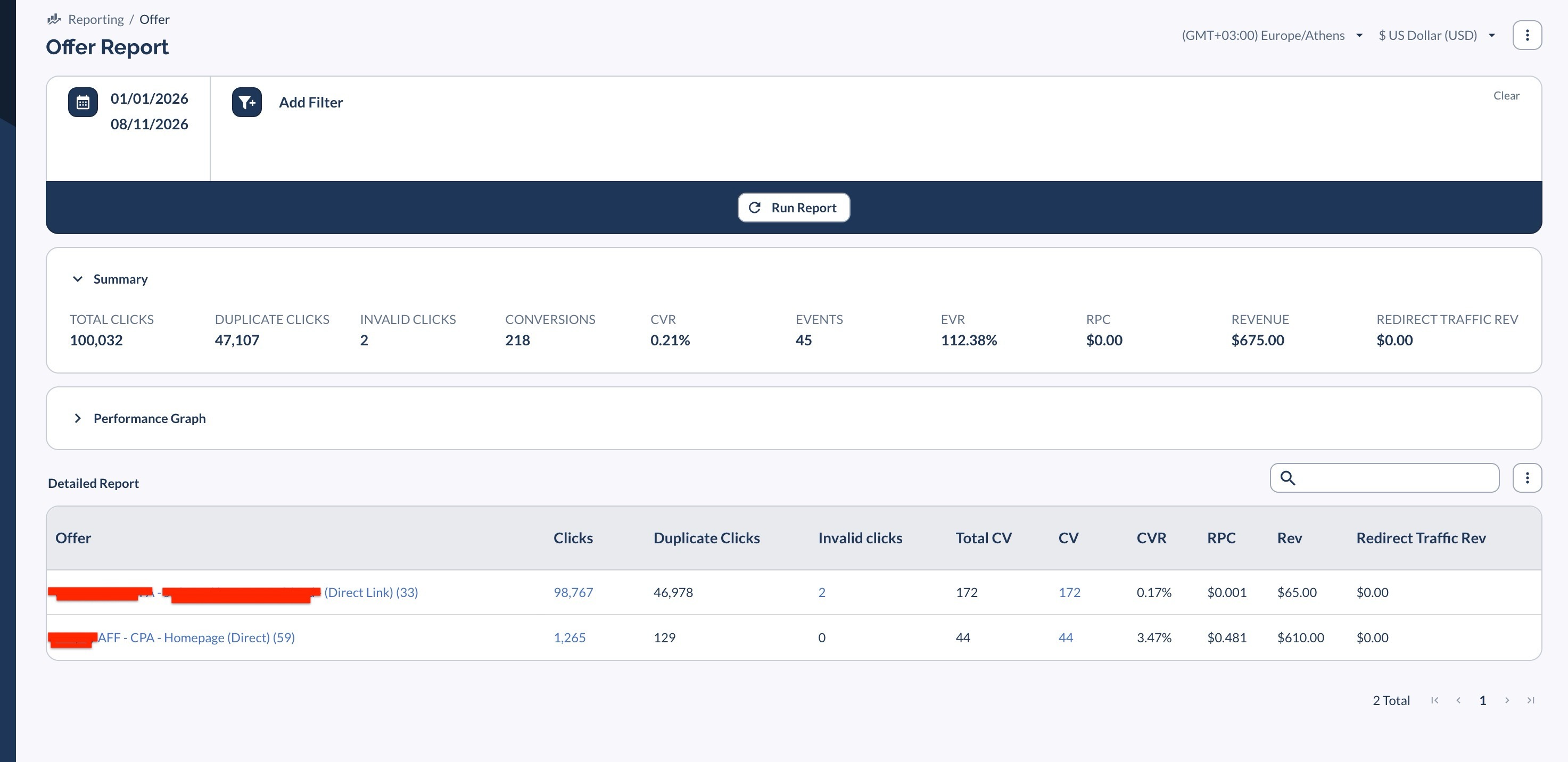
| Clicks* | 98,767 |
| Registrations | 172 |
| CVR | 0.17% |
| Revenue | $65 |
* In the popunder ad format, each paid impression automatically opens the landing page, so the number of paid impressions matches the number of recorded clicks.
With a CPM of $2, the traffic cost was about $198, while the campaign generated $65 in revenue:
98,767 / 1,000 × $2 = $197.53
Although this stage wasn’t profitable on its own, it successfully helped to build a low-cost audience of DACH users who had already shown interest and completed the registration. It became the foundation of the second stage – the audience retargeting campaign.
Stage 2. Audience Retargeting
The second stage focused on re-engaging the audience collected in Stage 1. They were no longer sent to the registration landing page. Through the retargeting campaign advertisement, they were directed straight to the offer.
Results of Stage 2
| CPM | $30 |
| Clicks | 1,265 |
| Conversions | 44 |
| CVR | 3.47% |
| Revenue | $610 |
With a CPM of $30, the total retargeting cost was $37.95:
1,265 / 1,000 × $30 = $37.95
Despite the CPM increasing 15x, the audience was already interested in the offer and generated $610 in revenue on a budget of less than $38.
The retargeting campaign achieved an ROI of approximately 1,507%:
($610 − $37.95) / $37.95 × 100 ≈ 1,507%
Overall Performance
| Total clicks | 100,032 |
| Total spend | $235.48 |
| Total conversions | 218 |
| Total revenue | $675 |
| Total ROI | 186.65% |
| Total profit | $439.52 |
The overall campaign achieved an ROI of nearly 187%, turning an initially unprofitable offer into a profitable two-stage acquisition strategy:
($675 − $235.48) / $235.48 × 100% = 186.65%
The biggest change came after the audience retargeting stage. Once users had completed the registration, the advertiser no longer had to pay for cold traffic.
After a second interaction with the audience, the conversion rate increased more than 20-fold, from 0.17% to 3.47%. The advertiser accepted a 15-times higher CPM ($30 instead of $2), because the value of these customers was significantly higher than that of cold traffic.
In sum, campaign profitability wasn’t driven by traffic volume alone. The decisive factor was identifying users who had already shown intent and re-engaging them with a different flow.
The numbers illustrate this even more clearly: 1,265 retargeting clicks generated $610 in revenue, while almost 99,000 clicks during the first stage produced only $65. In other words, just 1.3% of the total traffic generated almost 90% of the campaign’s total revenue.
Key Takeaway
This case demonstrates that the problem wasn’t the offer itself or the lack of interested customers. The issue was asking cold users to convert after a single interaction. Changing the acquisition flow proved more effective than continuing to optimize the original setup. This approach turned an underperforming campaign into a profitable two-stage strategy:
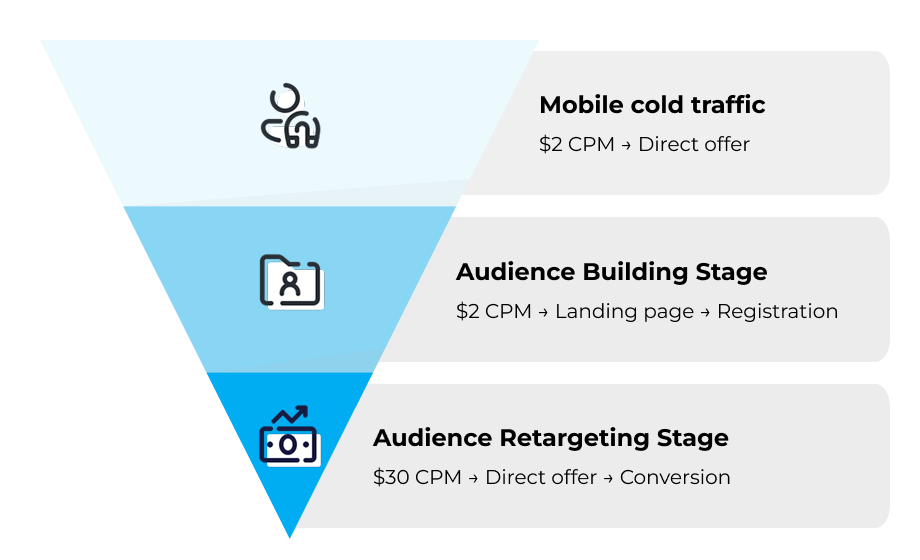
The retargeting stage achieved an ROI of approximately 1,507%, while the overall campaign reached an ROI of nearly 187%, including the cost of acquiring the initial audience.
The key takeaway is simple: campaign performance isn’t always determined by how cheaply you can buy traffic. In many situations, success depends on showing the offer to the right customer at the right stage of their journey.